Phnom Penh Condo Market 2026: Supply, Prices, Yields & What's Actually Selling
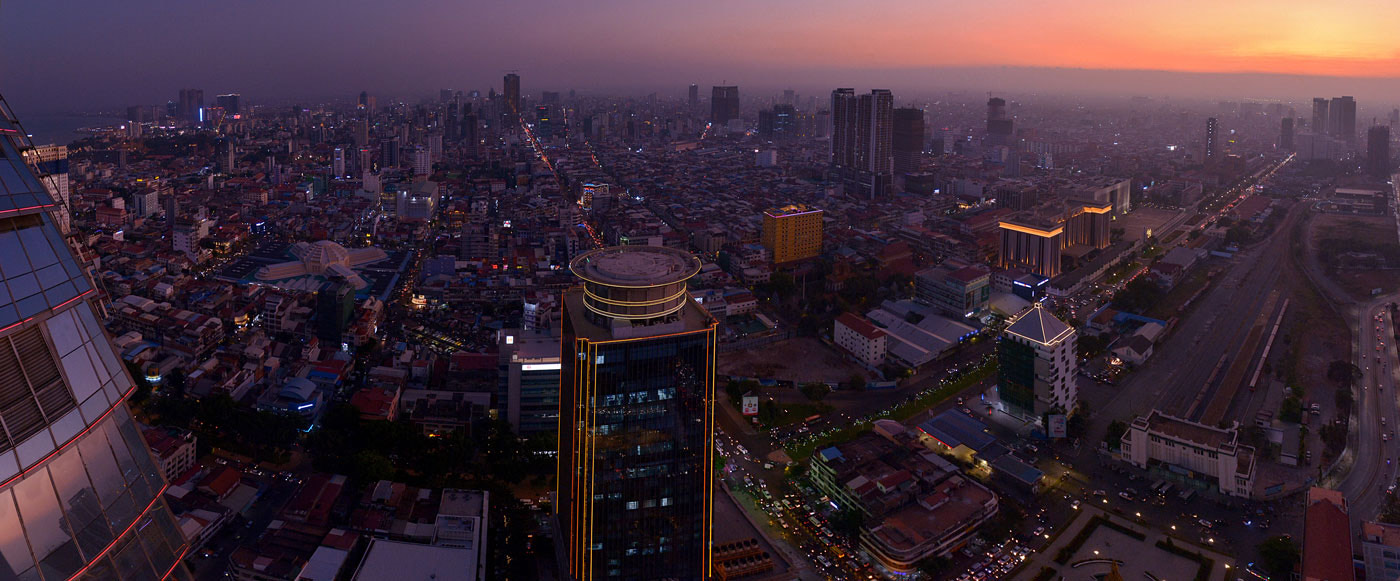
The euphoric supply curve of 2016–2019 is gone. So is the panic of 2020–2023. What's left is a market that's bigger, more segmented, and more honest than ever — one where developers can no longer rely on speculative off-plan flips, and where buyers finally have the leverage they were promised.
This is a complete read on where the market stands in 2026: how much stock exists, what's actually transacting, where prices are going, and which segments are quietly outperforming the headline narrative.
The State of Supply: Phnom Penh Is Now a 76,000-Unit Market
The supply story is the single most important number in this market — and most published figures are already out of date.
According to CBRE Cambodia, total condominium supply in Phnom Penh reached approximately 80,000 units by the end of 2025, up from around 72,000 units in 2024 and 57,000 units in 2023. APS put the Q1 2026 figure at over 76,000 units across more than 150 projects, with mid-range developments accounting for the largest share.
The composition matters as much as the headline:
Mid-range condominiums
now make up more than half of total stock
Affordable units
account for roughly one-quarter of supply
High-end and prime units
comprise the remaining ~20%
These figures reflect the project universe monitored by CBRE and Knight Frank, which centres on branded and foreign-marketed buildings. A small but emerging ultra-budget tier (units under USD 35,000) sits outside this universe and is discussed separately below.
Two notable H2 2025 completions — Vue Aston (895 units) and La Vista One River View (875 units) — added 1,770 high-end units alone, with average selling prices reported at around USD 676 per sqm of net saleable area at launch.
Crucially, new launches are slowing and shifting downmarket. APS recorded over 3,300 condo units launched across six projects in Q1 2026, with only 26% in the high-end category — a clear signal that developers have read the room and are now building for end-users rather than speculators.
The takeaway: Phnom Penh's condo stock has roughly doubled in three years. But the new supply being added is overwhelmingly mid-tier and affordable — meaning the high-end oversupply problem is no longer being actively worsened, just slowly absorbed.
Pricing: A Market Splitting in Two Directions
Headlines about "price collapse" and "robust recovery" are both partially true — they just describe different segments.
What the major research houses are reporting
CBRE Cambodia reported that after a subdued first half of 2025, the high-end condominium market in Phnom Penh showed signs of recovery in the second half, with average sales prices rising around 5% year-on-year to surpass USD 2,800 per sqm in Q4 2025 (approximately +3.8% in real terms).
Knight Frank, however, struck a more cautious tone, noting that geopolitical uncertainty — particularly ongoing Cambodia-Thailand border tensions — has weighed on transaction activity, with average sales rates for monitored projects falling to roughly 3–4%, the lowest in recent decades.
The National Bank of Cambodia's Residential Property Price Index showed Phnom Penh prices declining 4.52% year-on-year in January 2026, the ninth consecutive month of YoY decline. In real (inflation-adjusted) terms, the decline was 5.7%.
Current price ranges by segment (early 2026)
Segment | Price per sqm | Typical Unit Price |
Ultra-budget (emerging) | USD 500 – 850 | USD 19,000 – 35,000 (studio / compact 1BR) |
Affordable / entry-level | USD 1,000 – 1,500 | USD 45,000 – 75,000 (studio / 1BR) |
Mid-range | USD 1,500 – 2,200 | USD 75,000 – 170,000 (1–2BR) |
High-end | USD 2,300 – 3,500 | USD 170,000 – 500,000 |
Luxury / branded residences | USD 3,500 – 5,000+ | USD 500,000 – 2,000,000+ |
For context, a typical one-bedroom condo of 30–40 sqm in Phnom Penh now sells for approximately USD 55,000 to 95,000 depending on the building and district, while a two-bedroom unit of 60–80 sqm ranges from USD 110,000 to 180,000. Studios in outer districts can be found from around USD 45,000.
The new ultra-budget category: condos under USD 35,000
The most overlooked development in the 2025–2026 market is the emergence of a genuine ultra-budget condo segment — strata-titled, foreign-ownable, and priced well below anything CBRE or Knight Frank tracks in their monitored project universe.
Borey Piphup Thmey has launched 1-bedroom units of around 39 sqm at USD 19,000 to 32,000 unfurnished — pricing that translates to roughly USD 500–820 per sqm. Arakawa 1 and 2 are operating in a similar price band, primarily with smaller studio formats. Both are strata-titled with no legal restriction on foreign ownership.
This is a small category today — currently a handful of developers rather than a market-wide tier — but it matters for three reasons:
It's invisible in headline market reports.
CBRE and Knight Frank's monitored project universe focuses on branded developers and foreign-marketed buildings, which means most published "affordable segment" data starts at roughly double these price points. Anyone reading only the major research reports would conclude this product doesn't exist.
It's almost entirely a domestic owner-occupier product.
These units are sized and priced for young Cambodian professionals and small households — the same demographic driving rental demand in mid-range buildings, but now able to buy rather than rent.
It signals where developer competition is heading.
With the high-end pipeline saturating and mid-range absorption slowing, the next meaningful supply battleground is the sub-USD 50,000 owner-occupier market. Whether more developers move into this band — or whether Borey Piphup Thmey and Arakawa remain outliers — will be one of the more important signals to watch through 2026.
For foreign investors, the rental yield math at this price point is interesting in theory but unproven in practice — the resale market for ultra-budget strata units is too thin to assess exit liquidity with any confidence yet.
The takeaway: Headline averages are misleading. The high-end is recovering modestly off a low base. The broader index is still declining. And outside the prime corridor, affordable boreys and well-located mid-range condos are quietly holding their value better than premium product.
District Snapshots: Where the Money Is Actually Moving
Pricing varies dramatically by district, and the distinctions are sharper in 2026 than they've been in years.
BKK1 (Boeung Keng Kang 1)
The capital's "golden mile" remains the benchmark. Tree-lined streets, walkability, the highest concentration of expat-friendly amenities, and proximity to embassies keep BKK1 the default choice for foreign tenants. Condo asking prices here typically range from USD 2,500 – 3,500 per sqm, with prime new-build product reaching higher. Net rental yields are reported in the 6–7% range by Knight Frank — strong by regional standards, modest by Cambodian ones.
Tonle Bassac & Daun Penh (Riverside)
The riverside corridor — anchored by the Mekong, the Royal Palace, and the NagaWorld complex — is Phnom Penh's most visible luxury market. This is where most branded residences, including the upcoming Ritz-Carlton, Radisson, and Picasso Sky Gemme, are concentrated. Condo prices here cluster at the upper end of the high-end segment, with luxury and branded units commanding the highest per-sqm rates in the city.
Chamkarmon & Toul Kork
Both districts dominate mid-range condo supply and offer the best balance of price-to-amenity for owner-occupiers. Toul Kork — long positioned as a "BKK1 alternative" for families — has matured into a destination in its own right, with strong demand from both Cambodian professionals and long-stay expat families.
Chroy Changvar
The peninsula across the Tonle Sap has been one of the more volatile sub-markets — significant price corrections from launch (some projects down 18–20%) but now stabilising as the Bassac River Crossing Bridge project (51% complete as of October 2025) and waterfront developments mature. Condo yields in the area are reported between 4.9% and 6.75%, with the lower end reflecting weaker absorption in some early-cycle projects.
Sen Sok, 7 Makara & Mean Chey
These outer and emerging districts now anchor the affordable and family-oriented condo segment. Sen Sok in particular has emerged as the practical choice for budget-conscious buyers, with most listings being borey houses and entry-level condos in the USD 50,000 – 120,000 range.
Koh Pich (Diamond Island) & the Southern Corridor
The waterfront enclave on Koh Pich — home to OCIC's flagship developments including Diamond Bay Garden — is increasingly differentiated as a master-planned waterfront destination rather than just another district. The opening of Techo International Airport in September 2025 (see below) has redirected developer attention to the southern corridor along Hun Sen Boulevard and into Kandal province, where land valuations are now appreciating after years of stagnation — a leading indicator for future condo development in the area.
Rental Yields: Cambodia's Quiet Competitive Advantage
If the capital appreciation story is mixed, the yield story remains exceptionally strong — and it's the single biggest reason the market continues to attract foreign capital despite the headlines.
According to the Global Property Guide, Cambodia's gross rental yields for apartments ranged from 4.9% to 9.75% in Q1 2026, with a national average of 7.54%. This was slightly lower than the 7.68% recorded in Q3 2025 but higher than 7.4% in Q1 2025 — meaning yields are essentially stable at globally elevated levels.
By comparison:
Bangkok and Ho Chi Minh City
rarely exceed 3–4% net yields
Singapore
typically delivers 2.5–3.5%
Manila
sits around 5–6%
Phnom Penh's yield premium is structural, not temporary. It's the product of three things: dollarised rental income (no foreign exchange risk for foreign landlords), low purchase prices relative to rents, and a thin condo rental supply for high-quality units despite the headline oversupply.
Vacancy rates have stabilised at around 15% on average in 2026 — a meaningful improvement from the pandemic-era 30–50% range, though still elevated by regional standards.
Who's Buying in 2026: The Domestic Shift
Perhaps the most consequential change in the market is the demographic of the buyer.
For most of the past decade, the Phnom Penh condo market was almost entirely a foreign-buyer story. That's no longer true. Domestic buyers — particularly urban professionals in their late 20s and 30s — now make up a meaningful and growing share of transactions, driven by shifting lifestyle preferences, smaller household sizes, and the appeal of low-maintenance urban living over traditional family homes.
The pattern across the market is what brokers describe as a clear "flight to quality": sales activity is concentrating in well-built, well-located developments with strong management, rather than being spread evenly across the entire pipeline. Generic mid-tier product without a clear differentiator is taking the longest to absorb.
Foreign buyer composition is also broadening. Where the 2016–2019 boom was dominated by Chinese capital, the current buyer mix includes meaningful flows from Singapore, Malaysia, and Taiwan as the established regional anchors, Japan and South Korea through institutional and developer-led channels, and a growing presence of Vietnamese buyers in the mid-range segment. Eastern European interest — historically negligible — has also become a notable trend, attributed to capital seeking jurisdictions outside the path of more volatile regional dynamics.
On the rental side, the tenant base has shifted from being predominantly expatriate to a more balanced mix of Cambodian professionals and foreign residents — a structural change that helps explain why rental yields have held up even as purchase prices have softened.
The Macro Backdrop: Why 2026 Is Different
Three macro factors are reshaping the condo market in ways that weren't true even 18 months ago.
1. Techo International Airport changed the geography of demand
The Techo International Airport officially commenced commercial operations on 9 September 2025, replacing the old Phnom Penh International Airport. The new Class 4F facility — a USD 1.5 billion project on a 2,600-hectare site approximately 19 km south of central Phnom Penh — has shifted the city's growth axis southward.
Areas along Hun Sen Boulevard, Takhmao, and Kandal Stung are now seeing renewed land valuation momentum. Property developers including Borey Peng Huoth and Chip Mong have already moved aggressively to acquire and launch product in this corridor.
2. Cambodia-Thailand border tensions are a real near-term drag
This is rarely discussed in promotional market reports but is consistently flagged by both Knight Frank and CBRE: ongoing tensions at the Cambodia-Thailand border have measurably dampened investor sentiment, particularly among foreign and speculative buyers. Knight Frank's monitored sales rate of 3–4% — the lowest in recent decades — is the clearest evidence of this drag.
3. The macro picture is softer than 2025 forecasts suggested
Growth has slowed. AMRO forecast Cambodia's GDP growth at 4.9% in 2026 in its April outlook (pre-Iran-conflict revisions), with downside scenarios from Mekong Strategic Capital suggesting 2026 growth could fall as low as 2% if global oil prices remain elevated. Tighter bank lending standards for real estate are also limiting the supply of credit-dependent buyers.
4. Government incentives are partially cushioning the market
The Cambodian government has confirmed a further postponement of the 20% capital gains tax on property, and stamp duty exemptions remain in place for properties valued up to USD 210,000 in 2025–2026 — a meaningful subsidy for the affordable and lower mid-range segments where domestic buyers are concentrated.
What's Outperforming, What's Underperforming
Based on the cross-referenced data from CBRE, Knight Frank, APS, and NBC, here's how the segments stack up entering mid-2026:
Outperforming
Mid-tier borey landed homes
— appreciating 2–4% YoY on genuine end-user demand
Well-managed mid-range condos in BKK1, Toul Kork, and Chamkarmon
— flat to modestly positive, with strong rental absorption
Branded residences
— Ritz-Carlton, Picasso Sky Gemme, and similar projects targeting an underserved luxury niche
Affordable condos in Sen Sok and similar districts
— driven by domestic urbanisation rather than foreign capital
Ultra-budget strata units (sub-USD 35K)
— a new category opening up genuine ownership for first-time domestic buyers; absorption strong but resale market still unproven
Underperforming
Generic high-end condos in oversupplied buildings
— facing the sharpest absorption issues
Speculative off-plan units in secondary districts
— buyers can negotiate 10%+ discounts off list
Older condo stock without strong management
— the "flight to quality" is leaving these units behind in both rental and resale markets
2026 Outlook: Three Scenarios
Forecasts for Phnom Penh property price growth in 2026 span a wide range depending on assumptions about confidence recovery, geopolitical de-escalation, and credit availability.
Conservative scenario (~0% growth) Border tensions persist, credit conditions stay tight, and foreign buyer sentiment remains cautious. The condo market continues to digest oversupply with another year of flat-to-slightly-negative pricing.
Base case (+2% to +5% growth) The market splits as it has in 2025: mid-tier landed and well-located mid-range condos appreciate modestly, while parts of the high-end condo segment continue to drift lower. Rental yields hold above 7%.
Optimistic scenario (+6% to +7% growth) Border tensions ease, tourism recovery strengthens with Techo Airport hitting capacity targets, and credit standards loosen. Both capital appreciation and rental demand strengthen, particularly in airport-corridor and waterfront micro-markets.
The five-year cumulative outlook is more constructive: total property price growth of approximately 22% by 2031 in base-case projections, with Phnom Penh likely outperforming the national average.
Practical Implications for Different Buyers
For end-user buyers — This is the strongest negotiating environment in a decade. Developer payment plans now commonly require just 10–20% down with flexible installments, and properties up to USD 210,000 qualify for full stamp duty exemption. Focus on completed or near-completed buildings with strong management.
For investors targeting yield — Cambodia's 7%+ gross yields remain difficult to match anywhere in Asia. The key is unit selection: well-located 1–2 bedroom units in BKK1, Tonle Bassac, and Toul Kork in projects with proven occupancy track records.
For investors targeting capital appreciation — The clearer plays are landed property in well-connected suburban districts and select waterfront/airport-corridor condo projects, rather than generic high-end stock in oversupplied buildings.
For developers — The market has spoken: end-user demand is in mid-range and affordable product. Pre-sales rates for new high-end launches without genuine differentiation (branding, location, amenities, management) are at historic lows. Differentiation through design, payment terms, and property management is no longer optional.
Sources & Methodology
The data and analysis in this article draws on:
CBRE Cambodia
— Phnom Penh Mid-Year Review 2025 and ongoing market research
Knight Frank Cambodia
— Real Estate Highlights H1 and H2 2025 reports
APS
— Phnom Penh Q1 2026 Real Estate Outlook
National Bank of Cambodia (NBC)
— Residential Property Price Index (RPPI), January 2026 data
Global Property Guide
— Cambodia rental yield analysis, Q1 2026
Cambodia Investment Review
— coverage of CBRE, APS, and Knight Frank releases
PropertyHub Cambodia
— internal listing and transaction data
All price figures are quoted in US dollars (Cambodia operates a dollarised economy in property transactions). Where sources differ — particularly on supply totals between CBRE (~80,000 units) and APS (~76,000 units) — figures reflect each firm's project monitoring methodology, and we've cited the source alongside the number.
PropertyHub Cambodia tracks the Phnom Penh condominium market in real time. For listings and live market data on specific projects mentioned in this article, browse condo listings on khpropertyhub.com.